Redact Personal Info from Text Before Pasting into ChatGPT (Protect PII & Secrets)
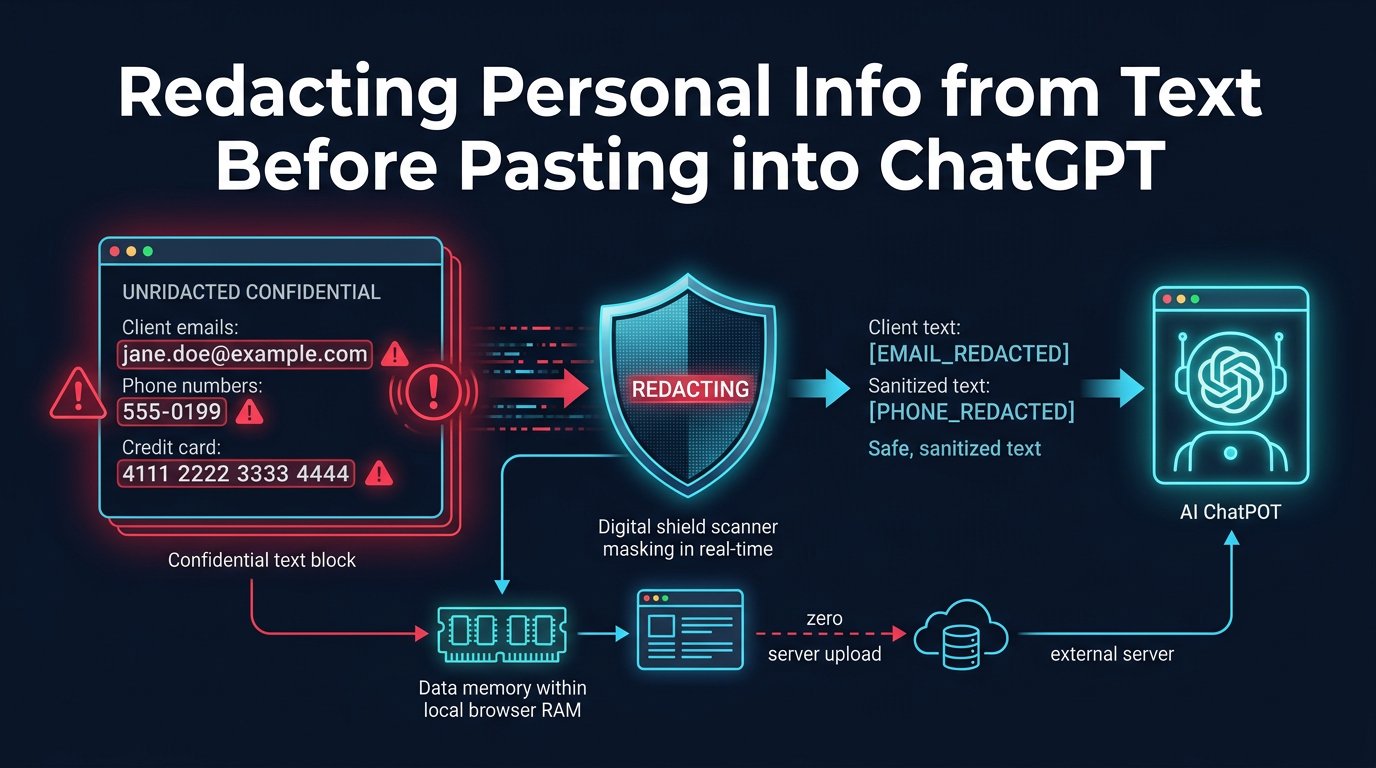
Figure 1.0: Real-time client-side text redaction masking emails, phone numbers, and financial records in browser memory before sending prompts to AI chatbots.
Generative AI assistants like ChatGPT, Claude, Microsoft Copilot, and Google Gemini have become indispensable tools for proofreading emails, drafting contracts, debugging code, and summarizing customer support tickets.
However, every word you paste into an AI prompt box is transmitted across the internet, logged on provider servers, and may be reviewed by human annotators or incorporated into future model training sets. Pasting sensitive customer data or personal identifiers (PII) is one of the fastest growing security liabilities in modern workplaces.
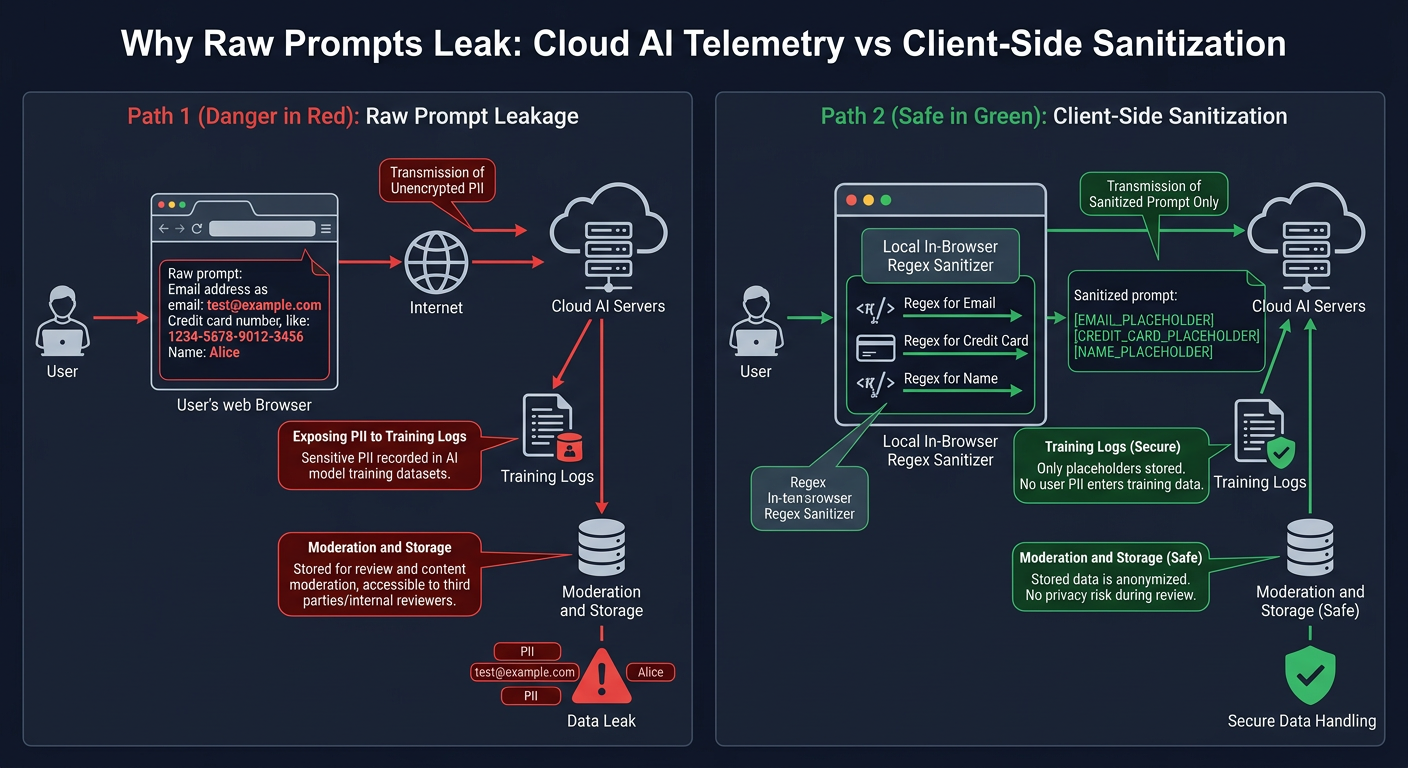
Figure 2.0: Comparison between Path 1 (Unencrypted PII leak to cloud AI telemetry logs) and Path 2 (Client-side in-browser regex sanitization).
What Sensitive Entities Commonly Leak in Prompts?
- 👤 Customer Personal Details: Full names, personal email addresses, phone numbers, and home addresses.
- 💳 Financial Identifiers: Credit card numbers, bank account IBANs, and transaction amounts.
- 🔑 Technical Infrastructure Secrets: Internal server IP addresses, database connection strings, and private API access tokens.
Automated Local Redaction with PrivacyKit
Instead of manually editing lines of text or risking enterprise data leaks, you can sanitize text entirely within your local web browser.
With PrivacyKit's Text Redactor (PII), regex detection scans and replaces emails ([EMAIL_REDACTED]), phone numbers ([PHONE_REDACTED]), credit cards, and IP addresses automatically with 100% client-side RAM processing and zero cloud uploads.
Try our Text Redactor (PII)
Redact emails, phone numbers, IBANs, credit cards from pasted text. 100% in-browser, no upload required.
Related Privacy Articles
2026-09-30
IPv4 Subnetting & CIDR Guide: How to Calculate Usable Host Ranges, Subnet Masks & Binary Maps
Master IPv4 subnetting and CIDR prefix notation (/8 to /32). Learn how to determine Network IDs, Broadcast addresses, usable IP host ranges, and binary bit allocation.
2026-09-29
How to Forensically Strip Hidden Metadata from Photos and PDFs: Terminal CLI vs In-Browser Zero-Knowledge Cleaning
Discover how to permanently remove GPS EXIF tags, author revision trees, and hidden IDs using Linux commands (exiftool, qpdf, mat2) or client-side browser engines.