How URL Tracking Parameters Surveil Your Digital Footprint (and How to Clean fbclid, gclid & utm Links)

Figure 1.0: Real-time visualization of query tracking parameters being stripped client-side without pinging external ad-tech servers.
Every day, hundreds of millions of links are copied and shared across WhatsApp, Telegram, X (Twitter), LinkedIn, iMessage, and Reddit. To the untrained eye, a URL looks like an innocent web address. But inspect a copied product link or news article closely, and you will notice a trailing string of confusing gibberish.
Those trailing characters are not harmless page variables. They are high-precision surveillance telemetry tokens designed to track who shared the link, who clicked it, and which social graph connection bridged the two users.
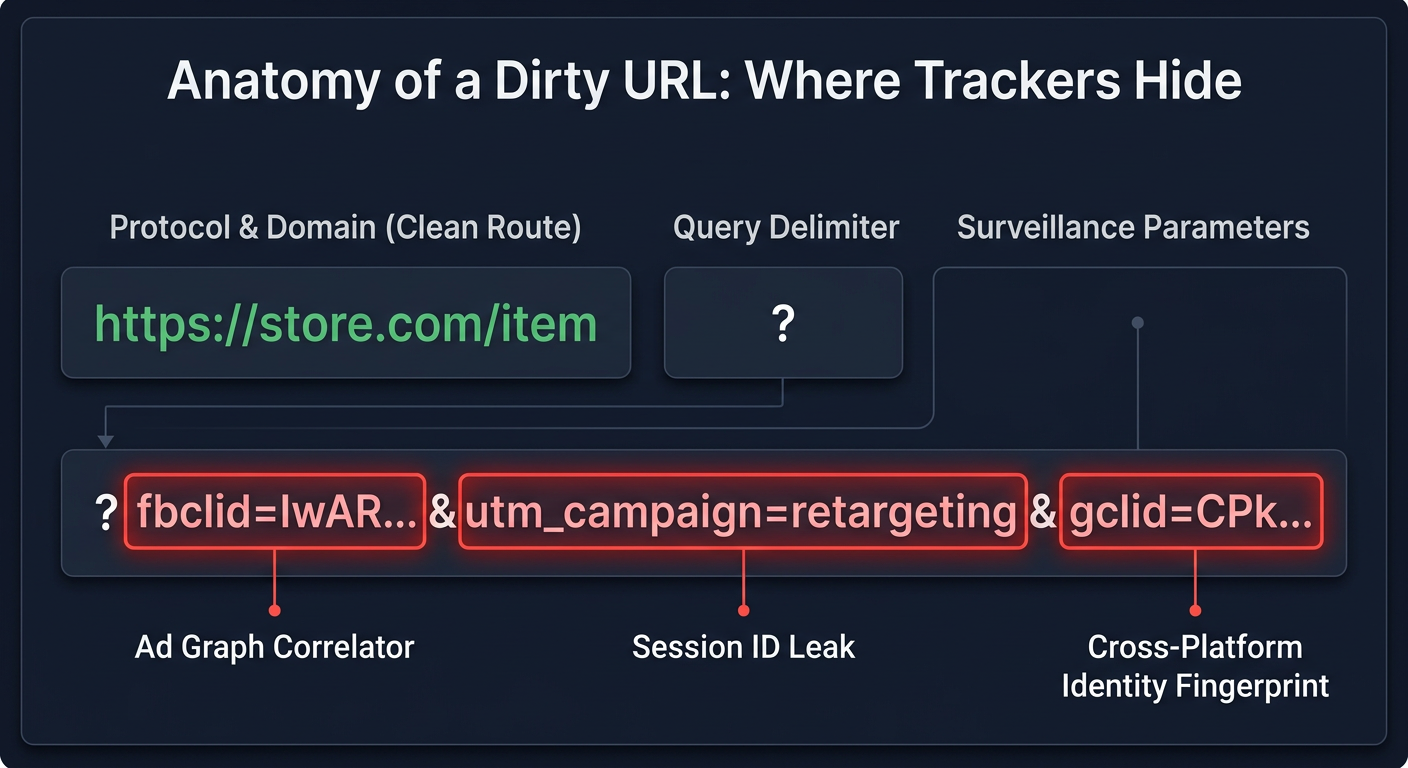
Figure 2.0: The three structural zones of a tracking link: clean route, delimiter, and invasive advertising tokens.
Anatomy of a "Dirty" URL
When you browse platforms owned by Meta, Google, ByteDance, or Amazon, outgoing links are dynamically modified to include bespoke query string identifiers:
- 1. fbclid (Facebook Click Identifier): Meta appends this parameter to every external link clicked inside Facebook, Instagram, or Messenger. When recipient user B opens the link on their device, Meta's tracking pixels on the target website cross-reference user B's IP and browser cookies with user A's original click token—mapping their real-world social relationship into Meta's behavioral ad graph.
- 2. gclid & gclsrc (Google Click Identifier): Google Ads generates unique, pseudo-random hashes for ad clicks. This connects your individual search history, Google Account identity, and subsequent purchase conversion on the destination merchant.
-
3. utm_* Suite (Urchin Tracking Modules): Parameters like
utm_source,utm_medium,utm_campaign,utm_content, andutm_termtrack distribution channels. While originally intended for aggregated analytics, combined query payloads often contain user-specific tracking hashes. - 4. igshid & tt_medium (Social Share Signatures): When you tap "Copy Link" inside Instagram Reels or TikTok, the app embeds your exact user account ID in the share token. When friends tap that link, TikTok and Instagram know exactly which real-life peer recommended the video.
Why Stripping URL Trackers Matters in 2026
🛡️ Breaks Cross-Device Ad Correlators
Prevents ad networks from connecting your private direct messages with targeted retargeting ads across devices.
🔗 Eliminates Social Graph Fingerprinting
Prevents data brokers from mapping out who your friends, family, and coworkers are.
⚡ Improves Security & Phishing Resistance
Cleaner, shorter URLs prevent malicious attackers from obscuring deceptive subdomains behind massive 300-character tracking bloat.
✨ Clean Aesthetics
Shared links look clean, professional, and readable without annoying tracking clutter.
How to Clean Links 100% Privately (Zero Cloud Uploads)
Most online "URL shorteners" or web-based cleaners log every URL you paste into their backend databases, creating a secondary privacy risk.
With PrivacyKit's URL Tracking Stripper, the cleaning algorithm runs 100% locally in your web browser's JavaScript sandbox:
- Paste any bloated URL from Amazon, Facebook, Google, TikTok, or YouTube.
- The client-side parser instantly strips
fbclid,gclid,utm_*,igshid,msclkid,mc_eid, and 40+ known surveillance query keys. - Your raw links and parameters are never uploaded to any server or cloud database.
Try our URL Tracking Stripper
Strip utm, fbclid, gclid & surveillance tokens from links. 100% in-browser, no upload required.
Related Privacy Articles
2026-09-30
IPv4 Subnetting & CIDR Guide: How to Calculate Usable Host Ranges, Subnet Masks & Binary Maps
Master IPv4 subnetting and CIDR prefix notation (/8 to /32). Learn how to determine Network IDs, Broadcast addresses, usable IP host ranges, and binary bit allocation.
2026-09-29
How to Forensically Strip Hidden Metadata from Photos and PDFs: Terminal CLI vs In-Browser Zero-Knowledge Cleaning
Discover how to permanently remove GPS EXIF tags, author revision trees, and hidden IDs using Linux commands (exiftool, qpdf, mat2) or client-side browser engines.